
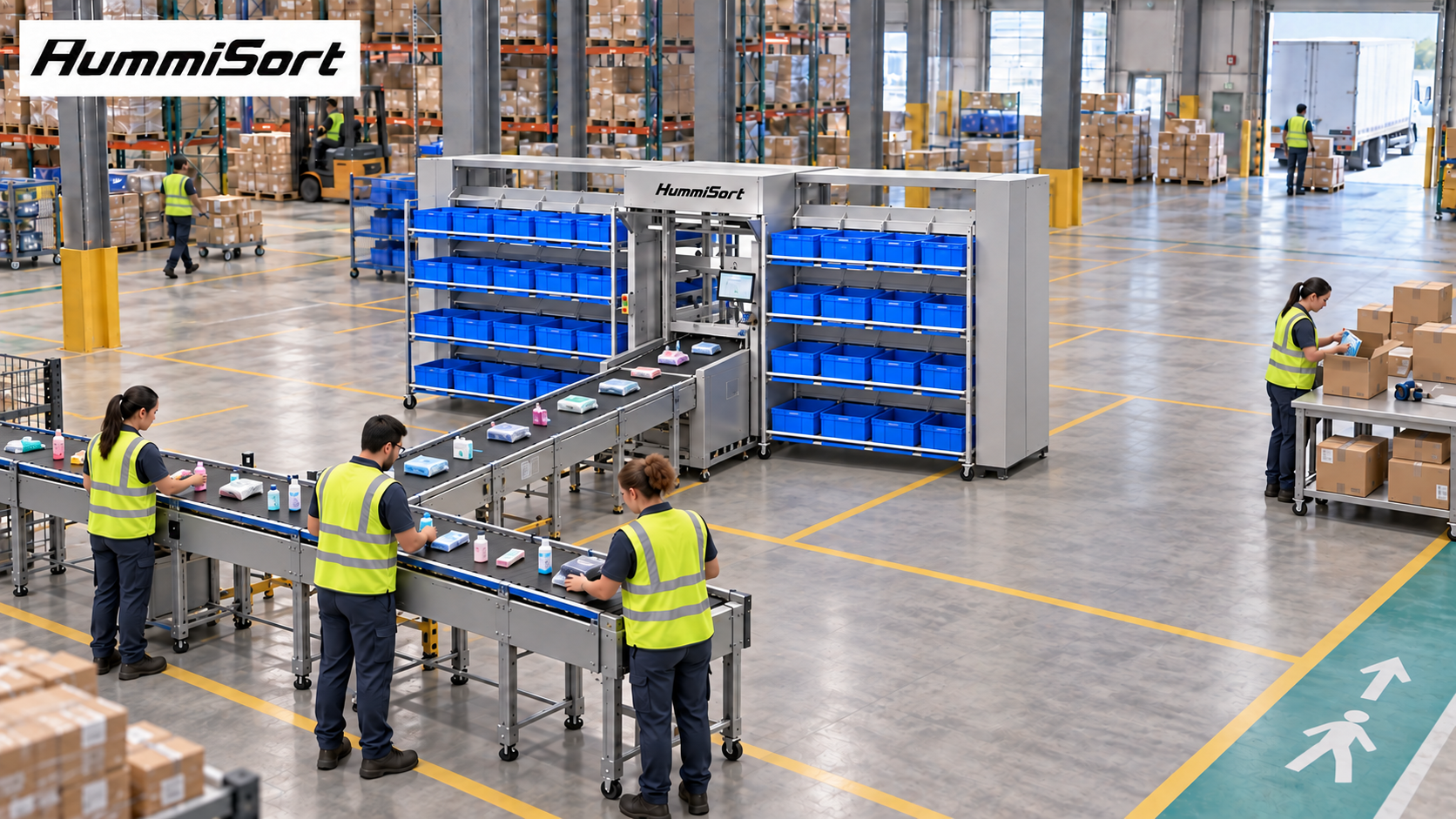
When a warehouse team starts discussing automation, the first question is often: “Do we need a completely new building?” For most operating fulfillment centers, the harder question is how to improve capacity without interrupting daily shipping.
Brownfield sites come with real constraints: columns, fire exits, low clear height, legacy conveyors, lease boundaries, existing interfaces and an order profile that changes every day. A system that looks simple on a drawing may create conflicts with forklifts, replenishment, picking or maintenance access once it reaches the floor.
A practical retrofit path is to map actual order and people flow, identify the process point where automation creates the most leverage, expand in phases with modular conveyors, scanning and HummiSort, keep a bypass for exceptions, and validate throughput, accuracy and operator movement after each phase.
Good brownfield automation should help the current space create value sooner, while leaving room for the next phase of growth.
Is your operation greenfield or brownfield? What was the biggest constraint during your last retrofit?