
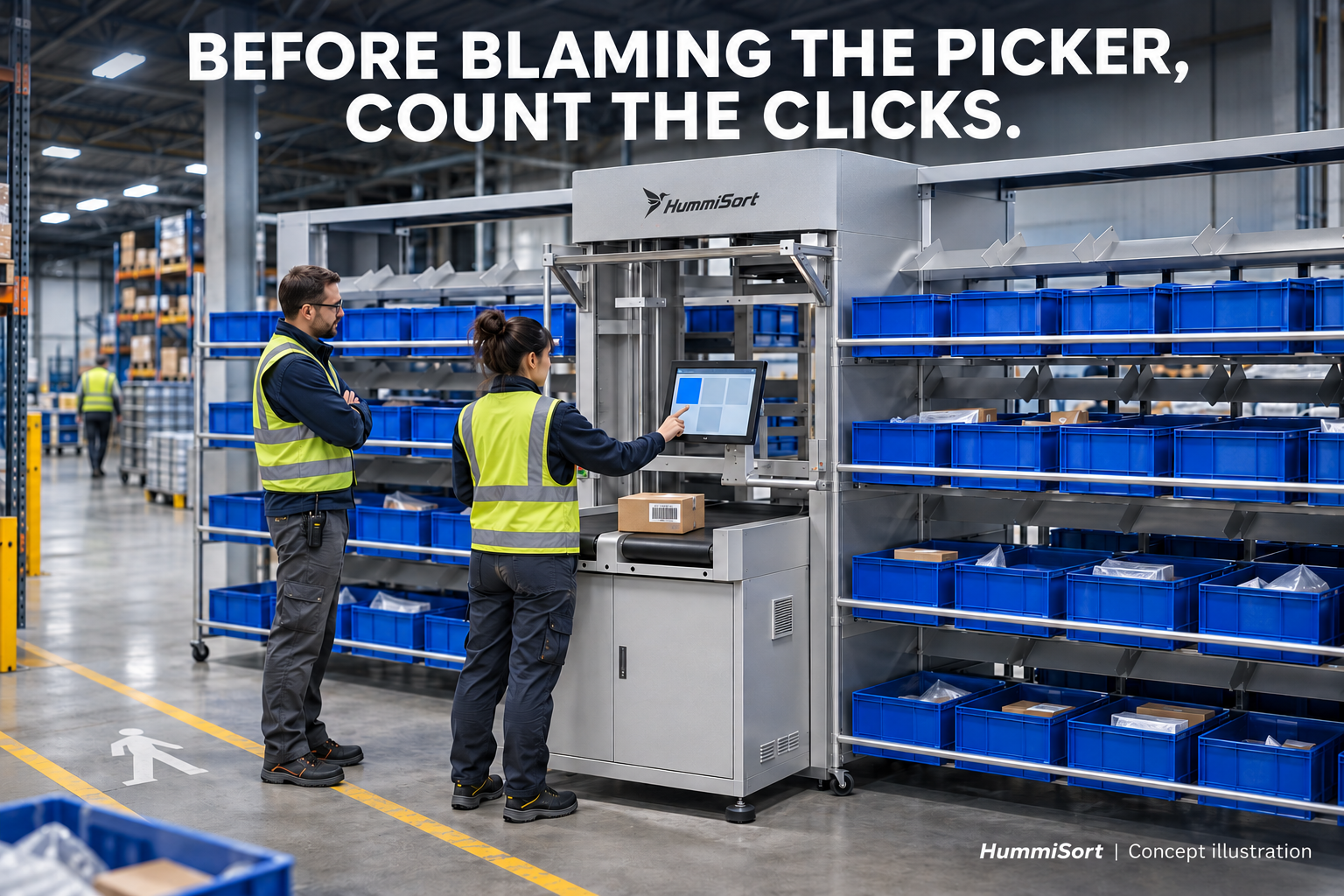
How many steps does it take to report one short pick in your warehouse?
One scan? Three screens? A walk to the supervisor? A note someone will enter later?
When recording an exception takes longer than hiding it, the workflow creates a dangerous incentive.
That does not make every workaround acceptable. It does mean “retrain the team” may be an incomplete fix.
Here is a practical test for your next WMS or automation acceptance review: Give an operator a normal task. Then introduce a missing item, unreadable label or damaged unit. Watch what happens next.
Measure:
- Time to record the exception
- Screen changes and repeated data entry
- Whether the operator can resume safely
- Whether the next person sees a clear status
Do not remove checks simply to reduce clicks. Remove duplicate work, confusing labels and dead ends.
The same principle applies at a put-wall induction station: the operator should know whether the item was accepted, held or needs intervention.
The fastest normal cycle means little if every unusual item sends someone searching for help.
What is the most common workaround in your warehouse—and what does it reveal about the system?