
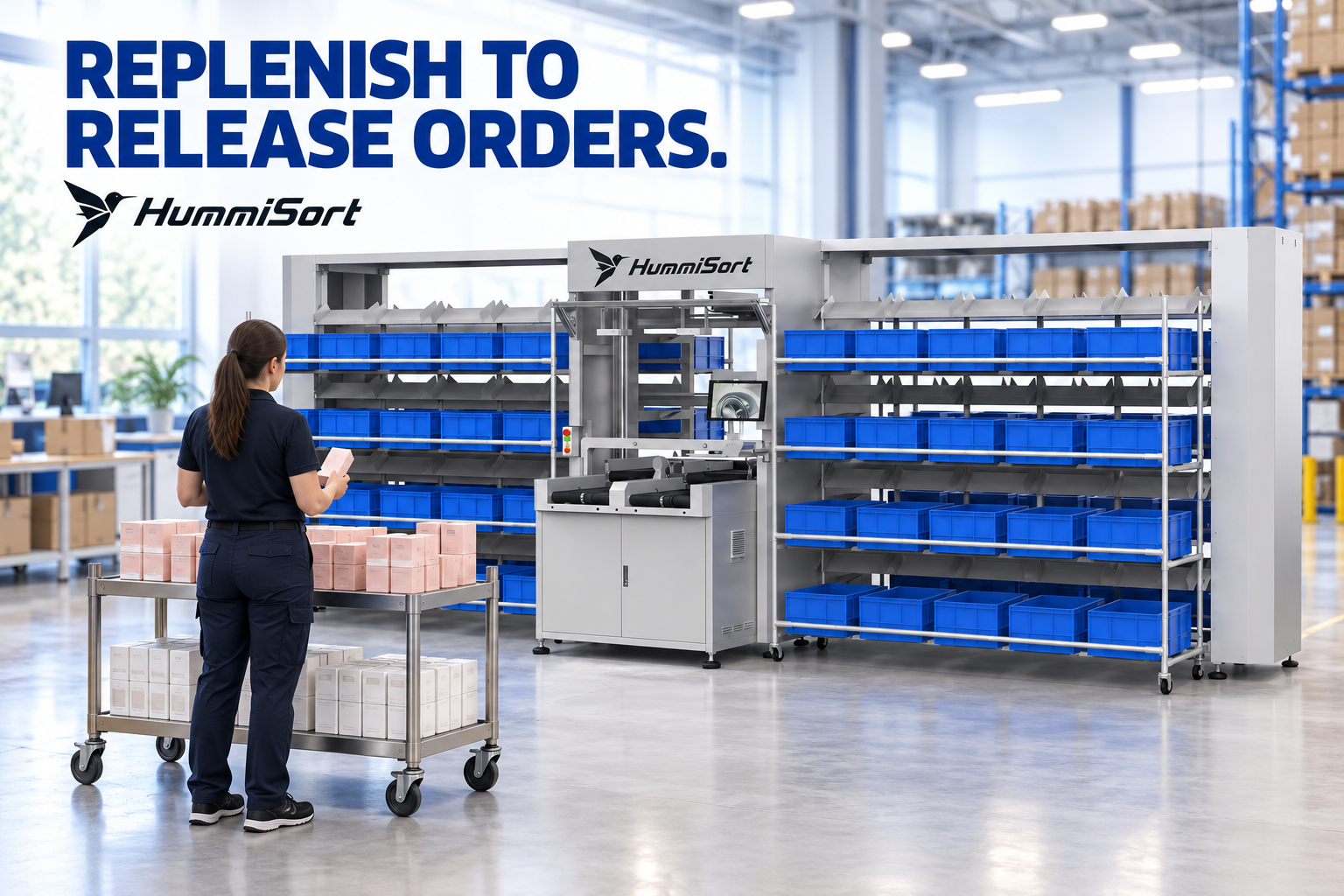
Two replenishment tasks. One available operator.
In a hypothetical example, SKU A has an empty pick location but only a few waiting orders.
SKU B still has some stock, yet many multi-item orders will need it before they can be completed.
Which task goes first?
“Lowest stock first” is simple. It is not always the whole answer.
A better decision may consider:
- Orders currently blocked or at risk
- Dispatch deadlines
- Time required to replenish
- Sorting locations occupied by incomplete orders
- The effect of delaying the other task
This is not an argument for always choosing SKU B. It is an argument for making the trade-off visible.
For automated put wall projects, replenishment and order consolidation should not be planned as unrelated activities. Faster sorting cannot supply a missing item.
The useful question is not only “How many replenishment tasks did we finish?”
It is also “Which orders can now move?”
Does your replenishment priority reflect stock levels, order urgency, or both?