
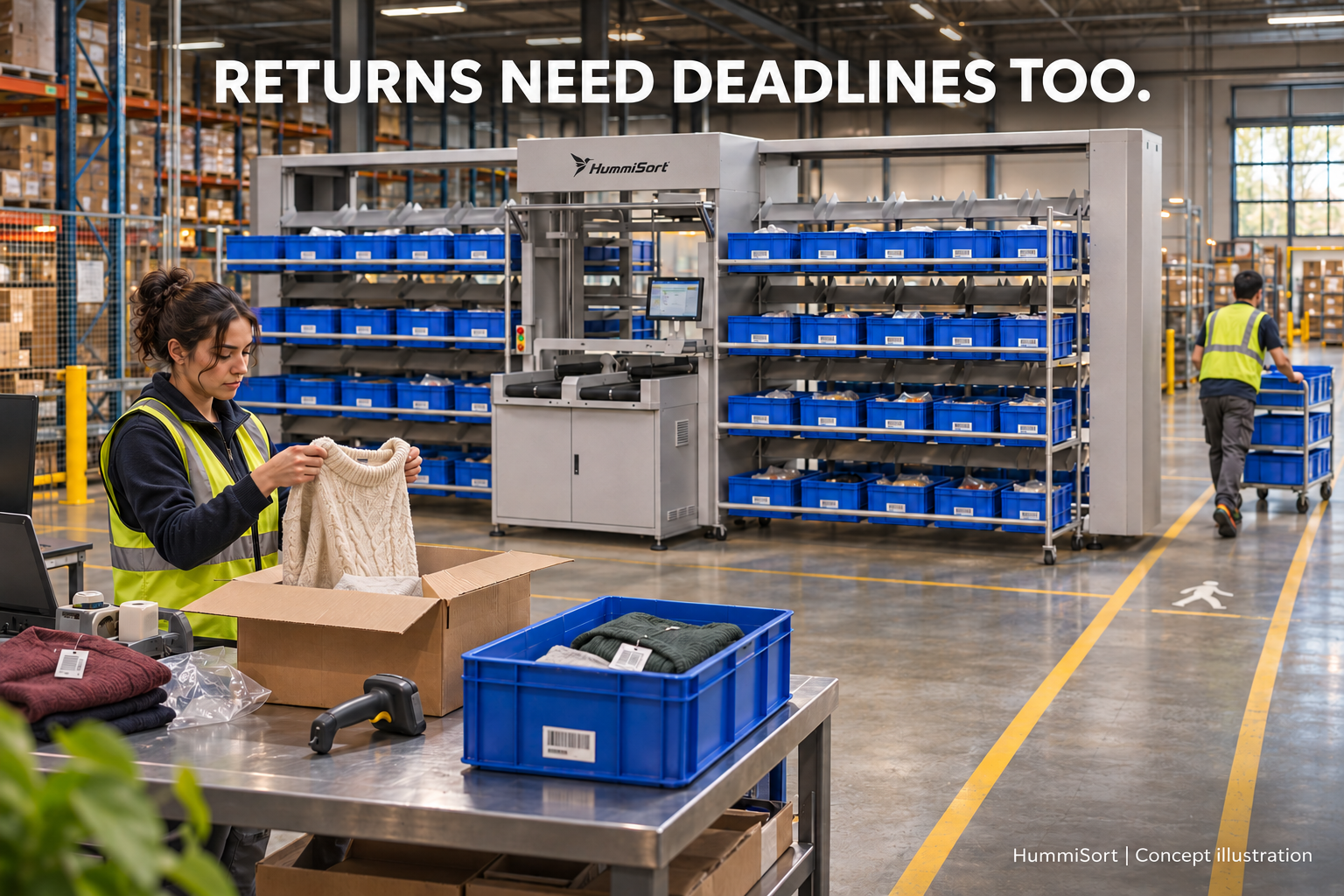
An item leaves the warehouse against a deadline.
It comes back—and suddenly nobody owns the clock.
Why?
Outbound orders have cut-offs, escalation rules and service commitments. Returns can end up waiting for “when we have time.”
But waiting is not equally expensive for every return.
A seasonal garment may lose its resale window.
A returned bestseller may be needed for an open order.
A damaged item may need specialist inspection before any decision is safe.
That suggests a better question than “How many returns did we process today?”
How long did it take to turn an eligible return into sellable stock?
Try a simple review:
- Separate receipt time from inspection and release time.
- Identify which queues create the longest waits.
- Prioritize by recovery opportunity, customer commitments and inspection requirements—not arrival time alone.
- Keep refund timing and stock-release timing visible as separate measures.
Sorting can direct items to the right next step. It cannot replace condition checks or decide whether a product is safe to resell.
The goal is not to rush every return.
It is to stop treating every hour of waiting as harmless.
If you could add just one returns KPI, would you choose refund speed, time to sellable stock, or recovered value?