
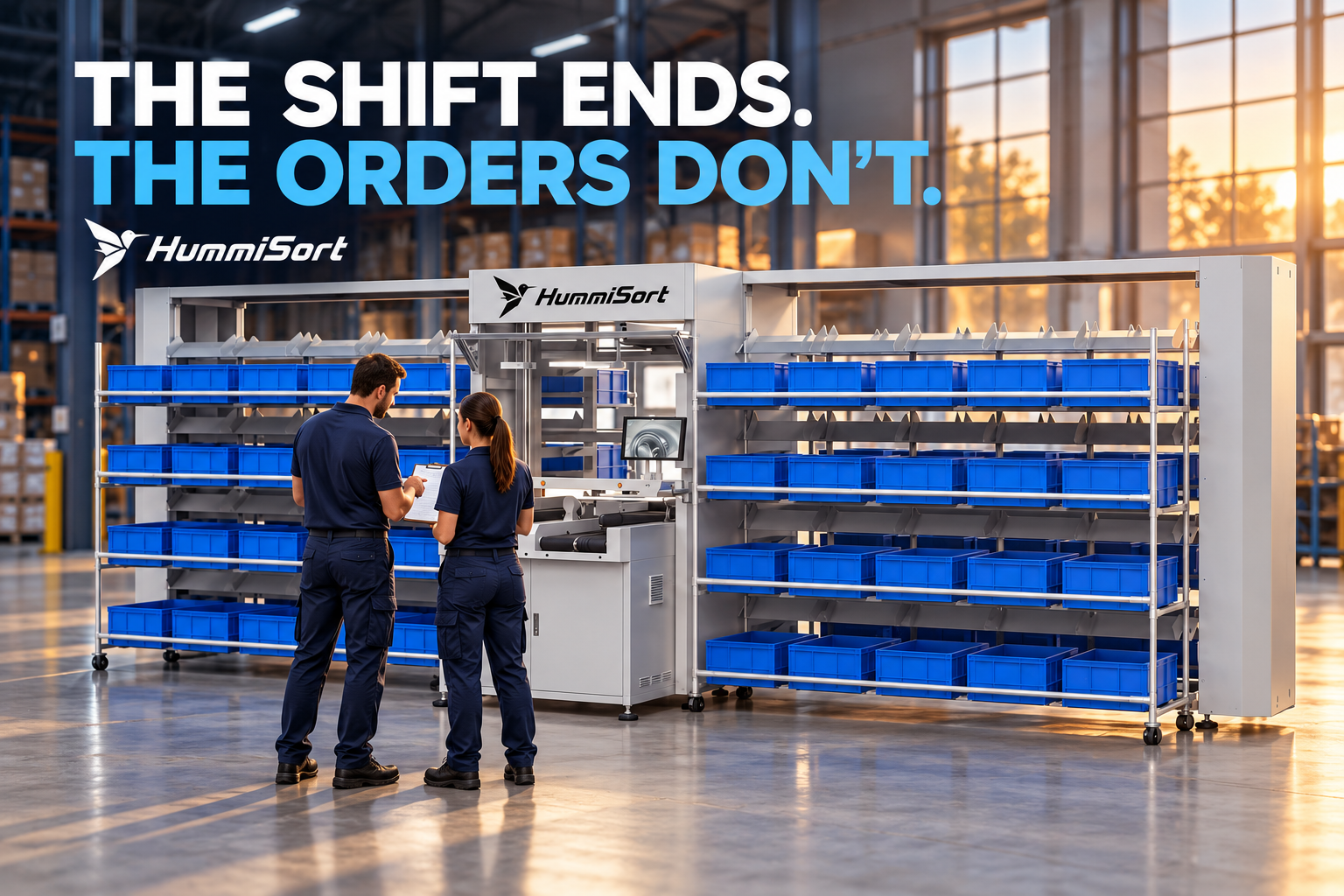
Imagine a tote containing three items, with one still missing.
The outgoing team knows it is waiting for replenishment. The incoming team sees an unfinished order.
Without the reason, the next shift may repeat checks, chase the wrong issue, or leave the order untouched.
A useful handover needs more than a completed-order count:
- Current state: what is waiting, and why?
- Action taken: what has already been checked?
- Next step: who owns it, and when should it be escalated?
Capture that context when the issue happens—not only when everyone is ready to leave.
At a put wall, a visible location status is helpful. But a status without an actionable explanation can still leave the next person guessing. System records and a clear handover routine need to work together.
Here is a practical test: During the first ten minutes of a new shift, is your team continuing the work—or reconstructing what happened?
What is the one piece of information you never allow a shift to hand over without?