Tariffs do not stop at customs.
They eventually show up as pallets inside the warehouse.
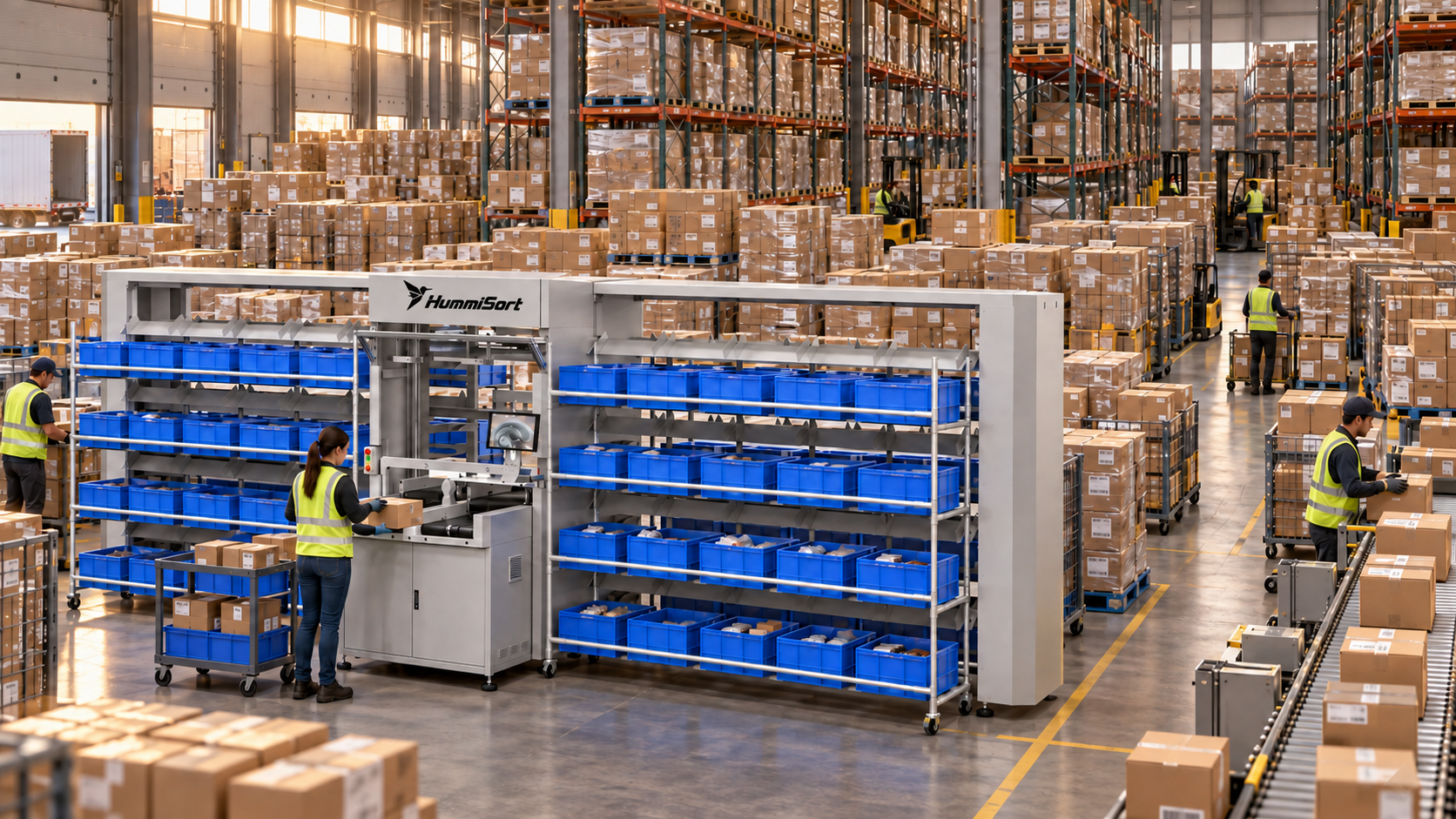
When companies expect a change in duties, they may pull inventory forward and buy earlier than demand requires. The purchasing decision may reduce one risk, but it creates several new operating conditions:
- reserve inventory occupies forward-pick and staging space
- receiving volume arrives earlier and in larger waves
- inventory turns slow down
- replenishment travel increases
- more slow-moving SKUs compete for the same locations
- outbound teams work around stock that was never part of the original capacity plan
An automation design based only on average inventory can become constrained even when customer demand has not increased.
This is why flexibility is not simply unused capacity. It is the ability to absorb a different inventory profile without breaking the outbound flow.
Modular work areas, adjustable put-wall capacity, clear exception routes and temporary operating modes may become as important as nominal throughput.
When trade policy changes, which option gives your operation more resilience: buying more inventory, renting temporary space or keeping the warehouse flow more adaptable?