
Most warehouse discussions describe fulfillment as a straight sequence: receive, store, pick, pack, ship, and return. In reality, it is a cycle. Each decision affects the next stage and often comes back in the next operating cycle.
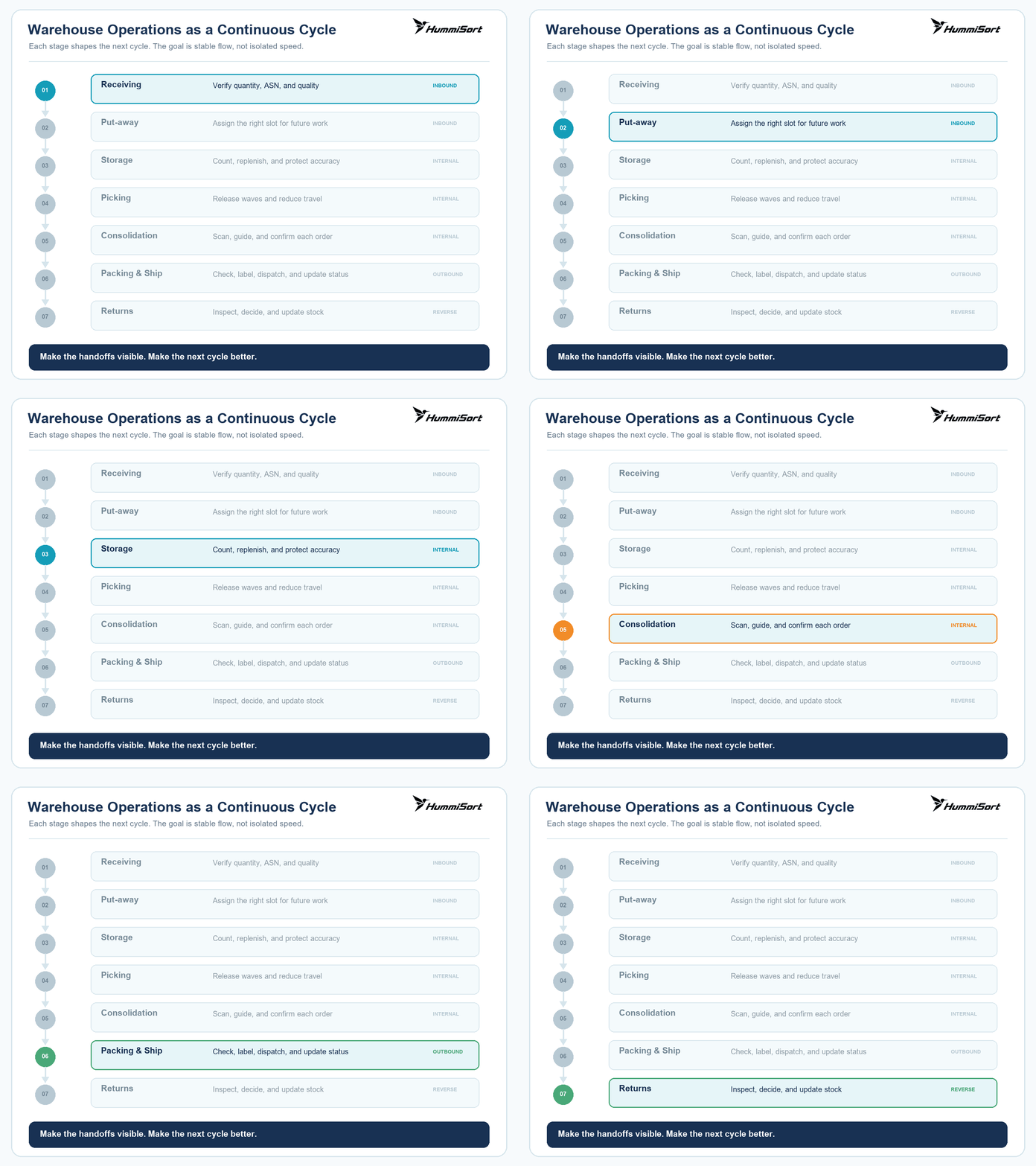
1. Receiving accuracy becomes downstream cost
An incorrect quantity, damaged carton, or missing ASN detail may look like a receiving issue. Later, it becomes an inventory discrepancy, a failed pick, a delayed order, or a customer service case. Accuracy at the dock is the first form of warehouse productivity.
2. Put-away is a slotting decision
Put-away is not only about finding an empty location. The location determines future travel, replenishment frequency, congestion, and picking consistency. A good slotting rule should consider velocity, product dimensions, order relationships, and replenishment effort.
3. Storage quality controls picking quality
Cycle counting and replenishment are not separate administrative tasks. They protect the reliability of the pick face. When inventory records and physical stock disagree, every later process has to compensate with searching, checking, and exception handling.
4. Picking is where time becomes visible
Picking often exposes the cost of earlier decisions. Poor slotting creates extra walking. Small waves create repeated routes. Unclear release rules create congestion. Improving picking therefore starts with understanding the entire cycle, not only measuring picks per hour.
5. Packing is the last control point
Packing is more than putting an item in a box. It is the final opportunity to confirm quantity, order identity, packaging choice, label, and weight before the shipment leaves the building. The earlier errors are detected, the cheaper they are to correct.
6. Returns feed the next cycle
A return is not the end of an order. It creates a new inventory decision: restock, quarantine, repair, scrap, or inspect again. If returns are processed slowly or inaccurately, they reduce available stock and create new picking errors in the next cycle.
7. Automation should strengthen the cycle
The best automation target is not always the most visible machine. It is the point where information is lost, responsibility is unclear, or the same decision is repeated. Scanning, visual guidance, automated consolidation, and traceability can make the cycle more stable without forcing every warehouse into the same design.
A practical question for warehouse leaders
Which step is currently passing the most problems to the next step? The answer may reveal a larger improvement opportunity than simply adding labor or speeding up one workstation.
Make order consolidation a stable control point
HummiSort Smart Put Wall combines scanning, visual guidance, and order consolidation to create clearer, traceable handoffs.
Explore HummiSort Smart Put Wall