
A warehouse is not truly scalable because it is fast on a normal day. The real test comes when order volume suddenly changes.
A flash sale goes live. A product becomes viral. A seasonal peak arrives. A major client adds a new sales channel. The warehouse may receive two or three times the normal volume, but the operation cannot add two or three times the space, supervisors, and experienced workers overnight.
Demand spikes reveal hidden weaknesses
- Picking routes become longer
- Multi-item orders pile up
- Manual sorting creates a second queue
- Checking and rework consume the most experienced operators
- New workers need too much time to become productive
- Service levels decline exactly when customers expect the most
It is also, “How easily can the process absorb tomorrow’s volume and recover from exceptions?”
Build processes that absorb change
A resilient fulfillment operation needs flexible workflows, clear order visibility, and fewer steps that depend on individual experience. Batch picking can create larger, more efficient waves. Scan-guided consolidation can reduce sorting uncertainty. An automated put wall can help expand sorting capacity without continuously adding manual checking stations.
Predictable performance matters more than maximum speed
The goal is not to build a warehouse for its highest volume every day. The goal is to keep the operation stable when demand is unpredictable. In modern eCommerce, peak season is no longer just one short period. A campaign, platform promotion, or viral product can create a peak at any time.
Scalability is not maximum speed. Scalability is predictable performance under changing demand.
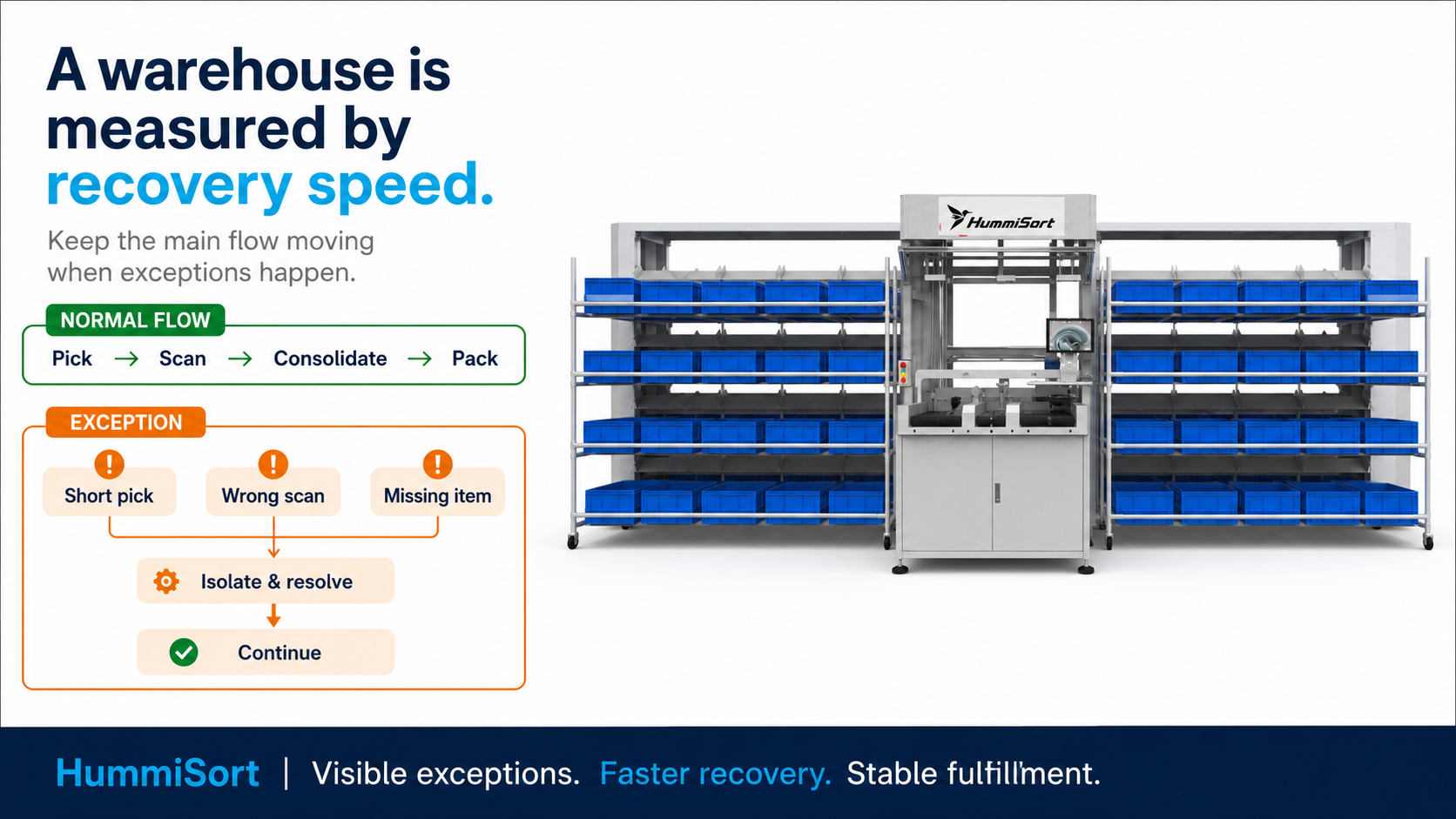
Make exceptions visible and keep the main flow moving
HummiSort Smart Put Wall combines scanning, visual guidance, and automated consolidation to help teams isolate and resolve exceptions faster.
Explore HummiSort Smart Put Wall