
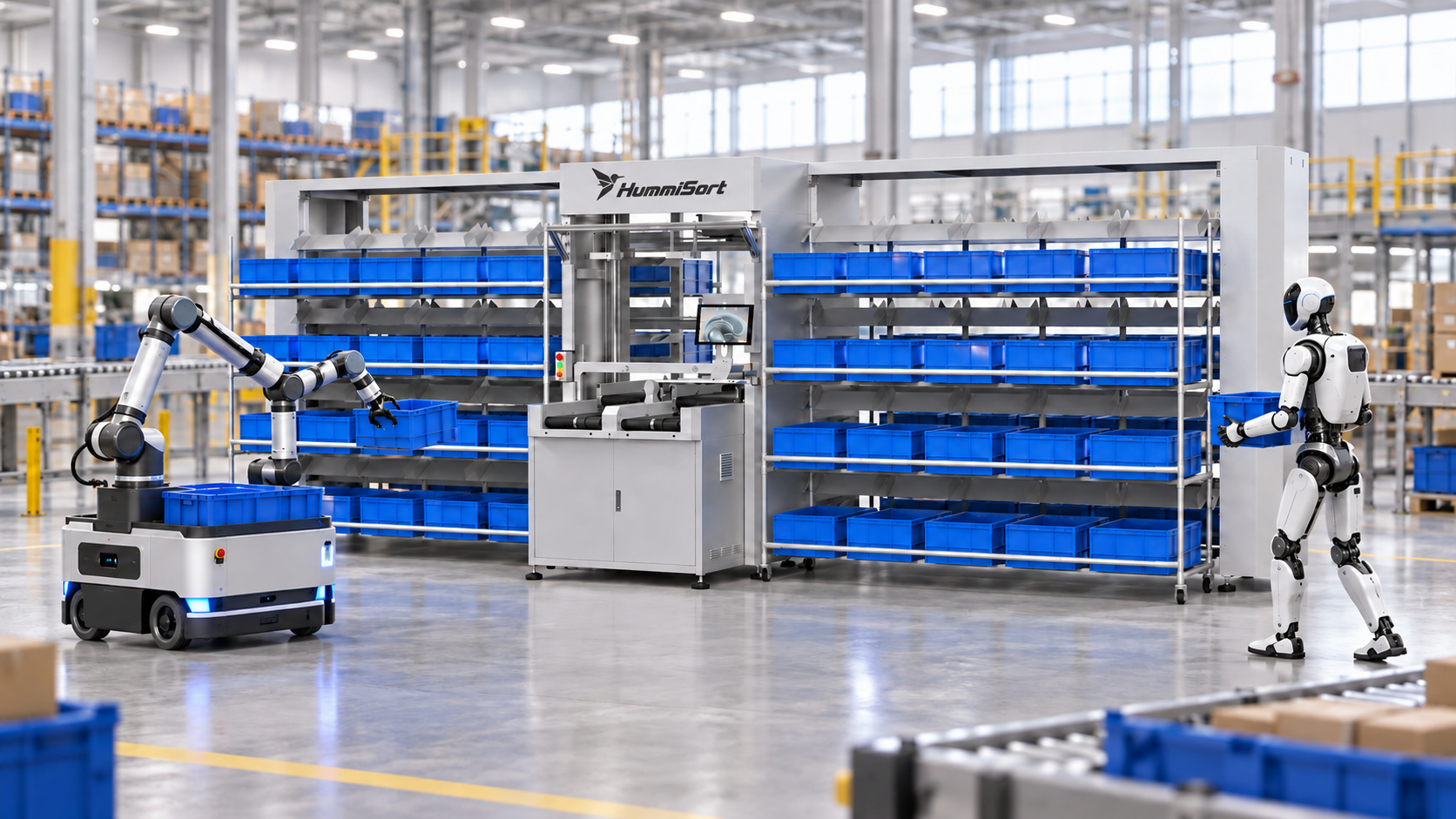
Does a warehouse robot really need legs?
The appeal of humanoid robots is easy to understand. They can potentially work in spaces designed for people, move between different tasks and handle more variation without rebuilding the warehouse.
But every extra degree of freedom has a price: stability, safety validation, maintenance, energy consumption and cycle time.
For an order-consolidation operation, the important question is not whether a robot looks human. It is whether the work actually requires human-like flexibility.
Does it need to move totes between islands of automation?
Handle products ranging from a lipstick to a large carton?
Switch from replenishment to exception recovery during the same shift?
For a stable, high-volume task, a purpose-built wheeled robot, conveyor or fixed mechanism may still win on speed and reliability. In a brownfield warehouse with changing tasks, greater flexibility may justify greater complexity.
So perhaps the procurement question should change.
Not: “Which robot looks more advanced?”
But: “How many useful tasks can it perform reliably in one shift—and how quickly can it be reassigned?”
Would you pay more for general-purpose flexibility, or choose purpose-built speed?
#WarehouseAutomation #HumanoidRobots #Intralogistics #Robotics #OrderFulfillment #HummiSort