
Single-order picking is simple. Wave picking is usually more efficient. The real improvement, however, is not simply picking more orders at once. It comes from coordinating layout, wave strategy, picking, consolidation, and packing as one continuous workflow.
Single-order picking versus wave picking
When a picker processes one order at a time, the same aisles and pick faces may be visited repeatedly. Wave picking groups multiple orders into one picking wave, reducing repeated travel, improving the use of shared SKUs, and creating more predictable routes.
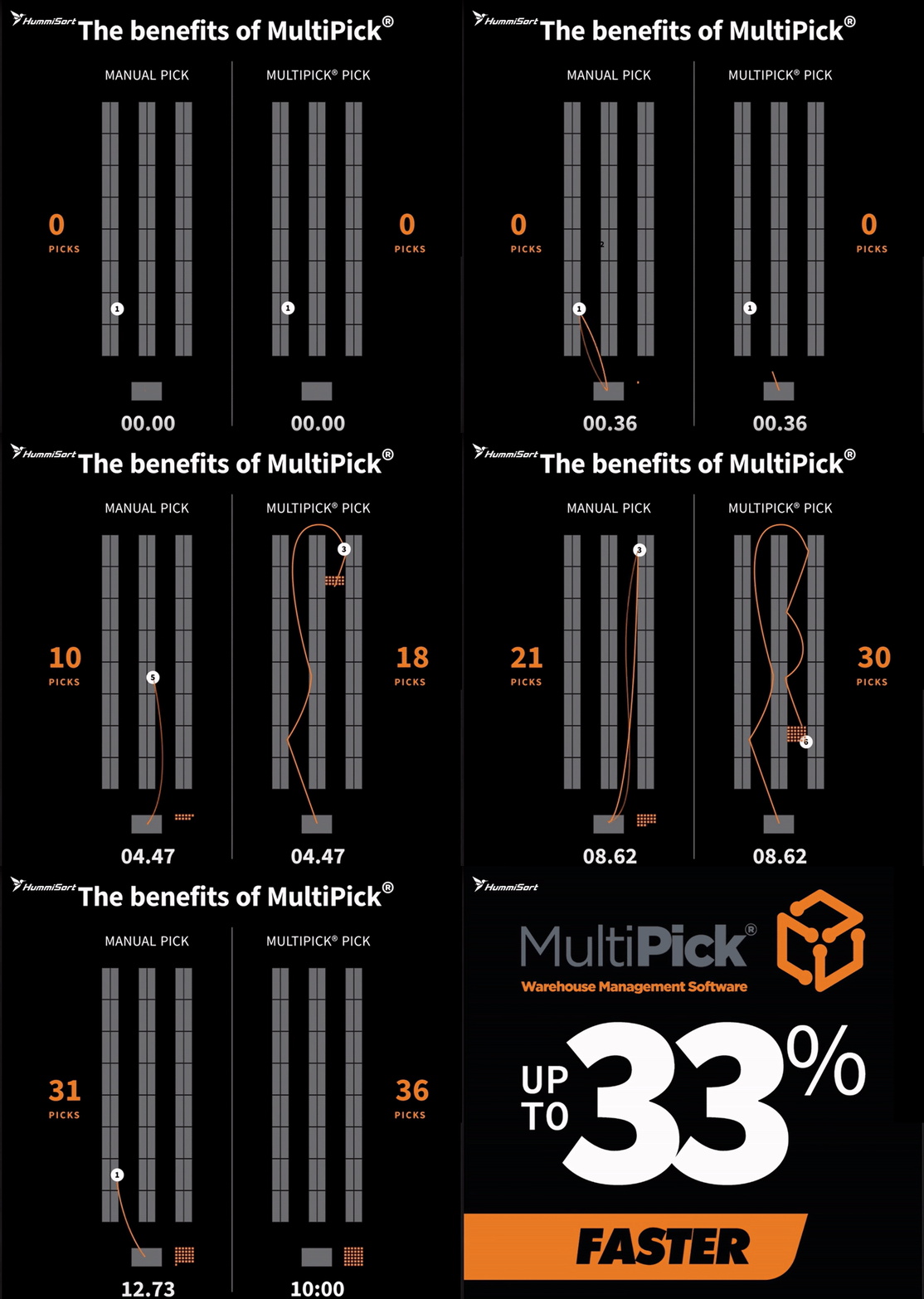
Why is single-order picking still common?
It is easy to operate and understand, requires less planning and process redesign, and can work well for small volumes, irregular order profiles, or operations with limited WMS capabilities. Its efficiency challenge grows with order volume.
Wave picking is a design problem, not only a batch-size problem
- SKU locations and pick-face proximity
- Items shared by multiple orders
- Order size and item quantity
- Product dimensions and handling requirements
- Shipping priorities and cut-off times
- Warehouse zones and walking distance
Grouping orders by SKU commonality, physical location, size, dimensions, and operational priority makes routes more predictable and reduces unnecessary movement.
After batch picking, consolidation can become the next bottleneck
Every item still has to be assigned to the correct order. Single-item orders can often bypass a put wall. For multi-item orders, the HummiSort automated put wall connects batch picking with scan-guided order consolidation.
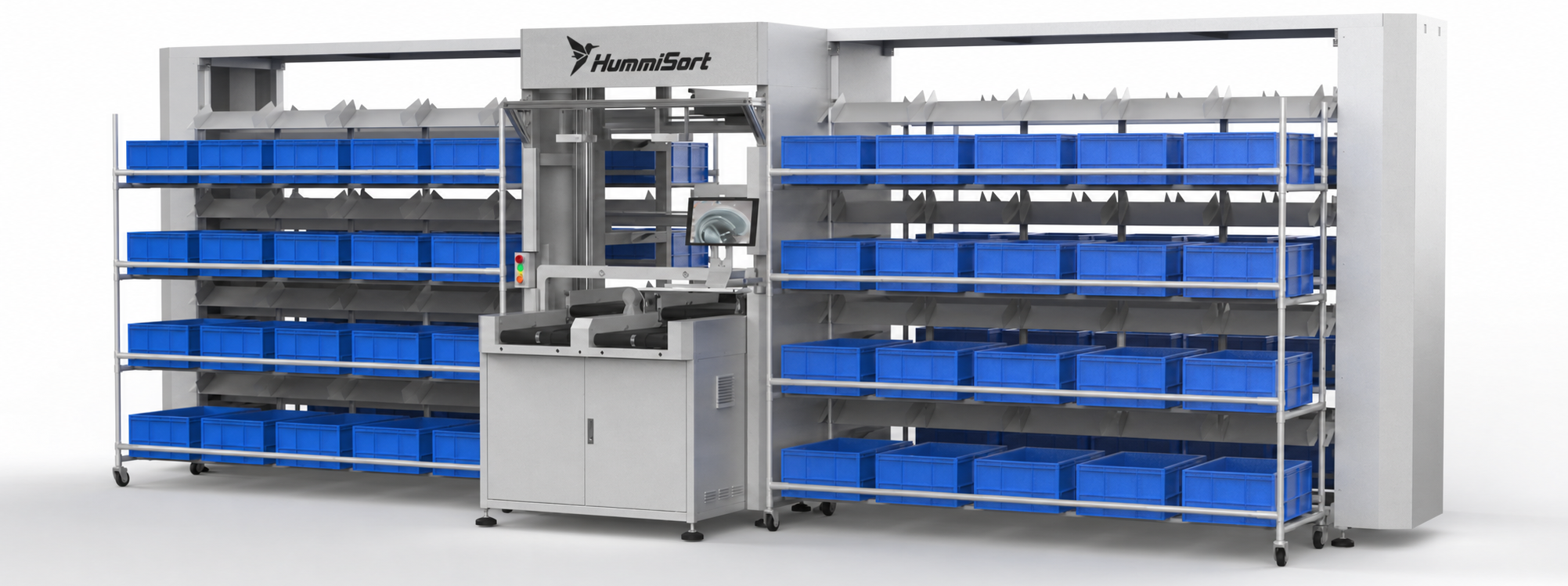
A more complete fulfillment workflow
HummiSort creates a controlled handoff between batch picking and packing. Each item receives a clear, traceable order destination before it reaches the packing station.
Where is your warehouse bottleneck today?
Is it picking, or order consolidation? Identifying the real constraint is the first step toward a continuous improvement loop.