
Most warehouse staffing plans are forecasts written as headcount: “We used eight people last Tuesday, so we will schedule eight people next Tuesday.” That feels stable. It is not always accurate.
Workload does not arrive evenly
Receiving, picking, sorting, packing, staging, and dispatch can peak at different times of the day, week, or season. A fixed schedule can therefore create a strange combination:
- One area is overloaded
- Another area is waiting
- Supervisors move people manually
- Temporary labor arrives after the bottleneck has already formed
Plan from task-level demand
Good labor planning starts with more than total order volume. How many lines need to be picked? How many multi-item orders need consolidation? When is the carrier cutoff? Which exceptions require experienced operators?
Automation should change the shape of work
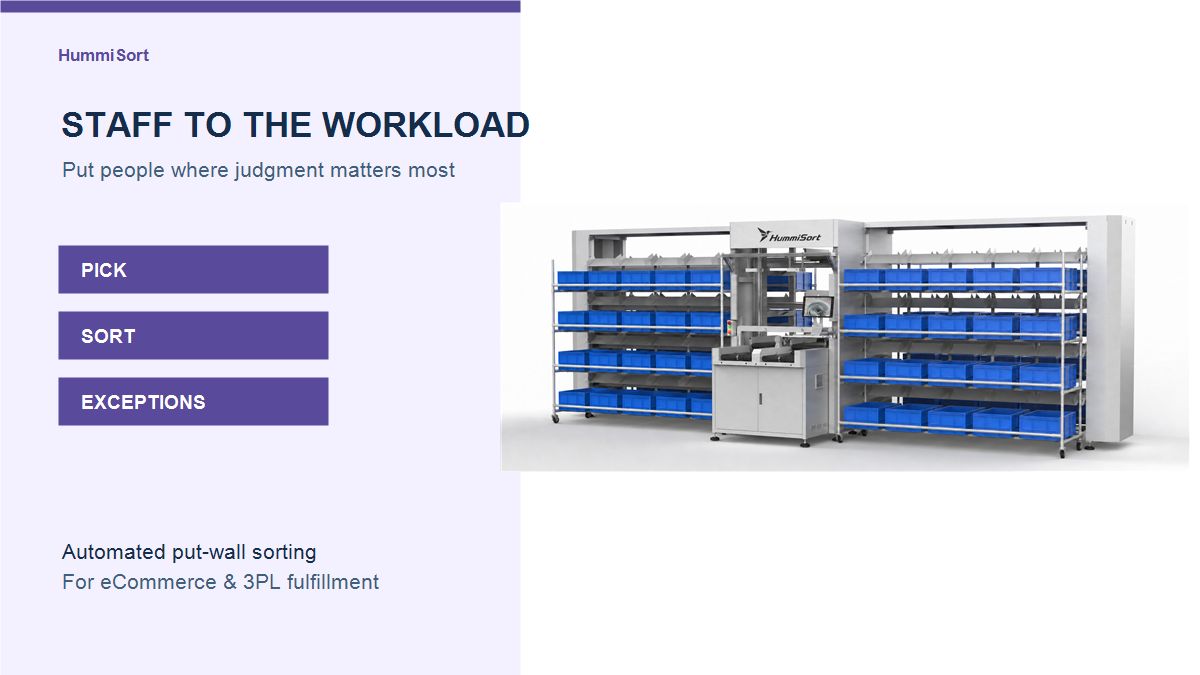
Automation is useful when it changes the shape of the work. A scan-guided HummiSort put-wall workflow can reduce repetitive manual sorting and make the order-consolidation workload more visible. The goal is not simply fewer people. The goal is to put people where judgment and exception handling matter most.
Align labor with the work that is actually arriving
BDAITEC HummiSort uses scan-guided consolidation and automated put-wall sorting to make order workload visible and keep people focused on judgment and exceptions.
Talk to us